
Back pain from sitting at a computer
Why does your back hurt from sitting at a desk? A physiotherapist explains the causes of back pain and suggests simple everyday changes and exercises.
Book online 24/7 · visits Mon–Fri 7:00–21:00, Sat 7:00–14:00 · 2 clinics in Krakow
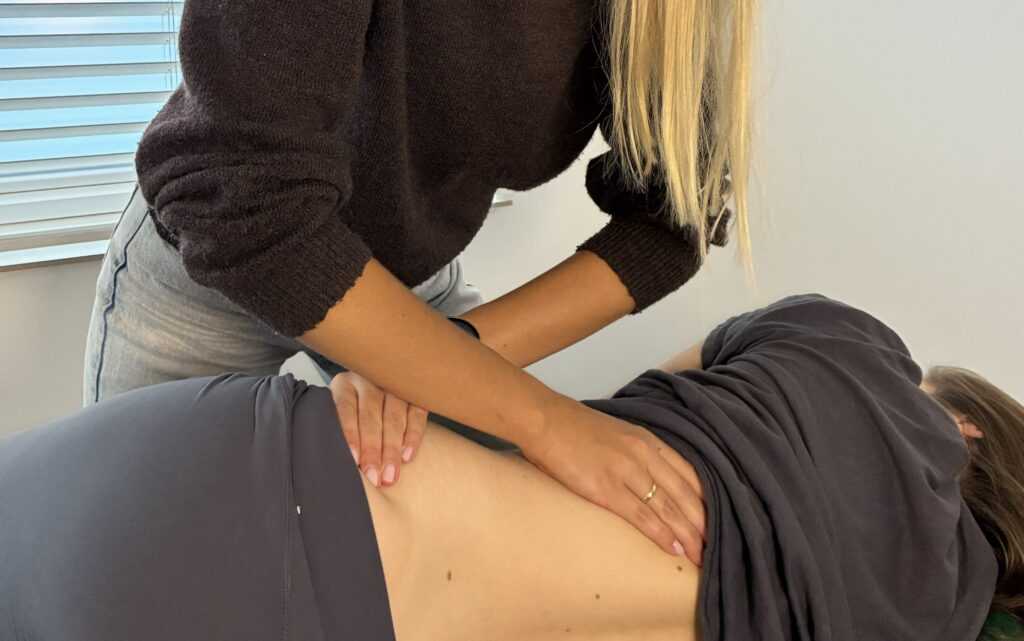
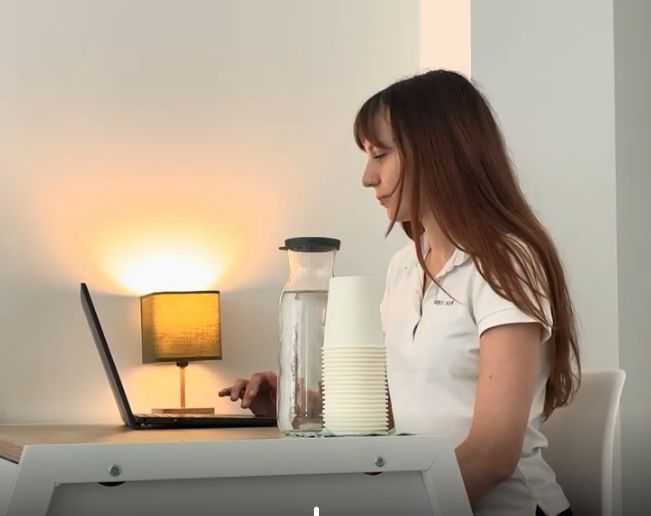
Spending many hours working at a desk is part of everyday life for a lot of people. After a few hours you may start to feel stiffness, tension or pain in your lower back. Sometimes the discomfort passes once you get moving, but for some people it keeps coming back and, over time, starts to bother them outside work too.
Back pain from sitting doesn't always mean that the problem is one "bad posture". What may matter is the way the spine is loaded, the condition of the muscles, joints and intervertebral discs and, in some cases, irritation of nerve structures.
Why can prolonged sitting make back pain worse?
When you work at a computer, your body stays in a similar position for many hours. Even a comfortable position can become a strain over time if you don't change it regularly.
The pain may be linked to various structures. Possible causes considered during the assessment include, among others:
- Intervertebral disc irritation or disc herniation
Intervertebral discs sit between the vertebral bodies and help to transfer loads. In some people, prolonged sitting and flexed positions can aggravate disc-related symptoms.
In a herniation, part of the nucleus pulposus may bulge through a damaged section of the annulus fibrosus. If a nerve root is also irritated, as well as back pain there may be pain radiating into the buttock or leg, tingling, numbness or muscle weakness.
- Overload of the facet joints of the spine
At the back of the vertebrae there are small facet joints that help guide the movement of the spine. They can be one source of local pain and stiffness.
Symptoms related to this area may get worse, for example, after staying in one position for a long time, as well as with certain extension and rotation movements of the trunk.
- Dysfunction or overload of the sacroiliac joint area
The sacroiliac joints connect the pelvis to the sacrum. Symptoms from this area may be felt as pain in the lower back or the upper part of the buttock.
During the assessment the physiotherapist may use a cluster of provocation tests, as a single symptom isn't enough to identify the source of the pain.
- Impaired function of the lumbar stabilising muscles
The work of the muscles responsible for controlling the trunk and pelvis may also play a part. One important structure is the multifidus muscle, which lies deep alongside the spine and helps control its segments.
In chronic lower back pain, impaired function of this muscle is seen in some patients. However, this doesn't mean it's enough to "strengthen one muscle" — training should be based on an assessment of the whole musculoskeletal system.
The onset of pain may also be influenced by:
- sitting for long periods without breaks,
- little movement during the day,
- limited hip mobility,
- poor tissue tolerance to prolonged loading,
- a sudden increase in activity after many hours of sitting,
- previous injuries,
- stress and tension affecting the way you move and how you perceive pain.
That's why the term "back pain from sitting" describes a situation in which a symptom appears, but doesn't yet tell us exactly which structure is causing it.
What can be rehabilitated when your back regularly hurts after work?
Rehabilitation shouldn't look the same for every patient. First, we need to establish which movements and loads trigger the symptoms and which parts of the musculoskeletal system need improving.
Depending on the assessment, therapy may include:
1.Work on the muscles that stabilise the spine
Exercises may involve, among others:
- the multifidus,
- the transversus abdominis,
- the oblique abdominal muscles,
- the erector spinae,
- the pelvic floor muscles,
- the diaphragm.
However, it's not about constantly "bracing your stomach", but about teaching these structures to work together properly during movement and everyday loads.
2.Work on the hips and pelvis
The muscles assessed include, among others:
- gluteus maximus,
- gluteus medius,
- the hip flexors,
- the hamstrings,
- the adductors.
If the hips have limited mobility or the muscles don't control the pelvis well, some of the load may be compensated for by the lumbar spine.
3.Improving spinal mobility
Some patients need work on the lumbar spine, while for others improving the mobility of the thoracic spine or the hips turns out to be more important.
Movement exercises, mobilisations and manual techniques can be used. Manual therapy can be part of treatment, but according to current guidelines it's best treated as part of a programme that also includes activity and exercise, rather than the only solution to the problem.
4.Work with the nervous system
If there are radiating symptoms, the physiotherapist may assess the mobility and mechanosensitivity of the nerve structures.
In appropriate cases, therapy may include neurodynamics and exercises that gradually increase the tolerance of the nerve and the whole limb to load.
5.Gradually increasing tolerance to sitting and activity
The aim of therapy shouldn't be to create a life in which the patient has to avoid sitting. If your job requires several hours at a computer, your body should also be gradually prepared for that kind of load.
That's why rehabilitation may include both more frequent breaks and changes of position at the start, and later a gradual increase in tolerance to longer periods of sitting.
Current guidelines on lower back pain emphasise the importance of staying normally active and doing appropriately chosen exercises.
If back pain from sitting keeps coming back, at FizjoStyl we can assess whether movement restrictions, muscles, joints, an intervertebral disc or nerve structures play the bigger role, and then tailor a further treatment plan to the results of the assessment.
Important: worsening pain combined with clear weakness in a limb, changes in sensation or other new neurological symptoms requires proper medical assessment. With back pain, rarer causes not directly related to the musculoskeletal system also need to be considered.
Need help in person? Physiotherapy in Kraków – FizjoStyl: clinics in Kliny and at ul. Wolska 2a.
Want to talk it over with a physiotherapist?
Book a free 15-minute consultation. We will talk about your problem and, if you wish, continue straight into a full visit.
See how you can help yourself
An exercise for desk workers
Hands behind your neck, elbows under your chin, lean back – 5 times for 5 seconds every 15 minutes of work.
Dowager’s hump: stretching at the table
Lean your bottom against a table, reach your arms far back, push your chest out and breathe deeply.
For drivers and people who sit for long periods
One leg raised, the other straight, tummy tight and a gentle lean back – 30 seconds, as often as possible.
The exercises in these videos are general guidance. If your pain is severe, getting worse or not going away, book a consultation.
Wolska 2a clinic
Prokocim, next to the Bieżanowska stop. Parking in front of the building.
See the clinic →