
Sudden back pain (lumbago) – what to do and when to see a physiotherapist?
Sudden back pain: what to do in the first few days, what to avoid and when to see a physiotherapist. Practical tips from the FizjoStyl physiotherapists.
Book online 24/7 · visits Mon–Fri 7:00–21:00, Sat 7:00–14:00 · 2 clinics in Krakow
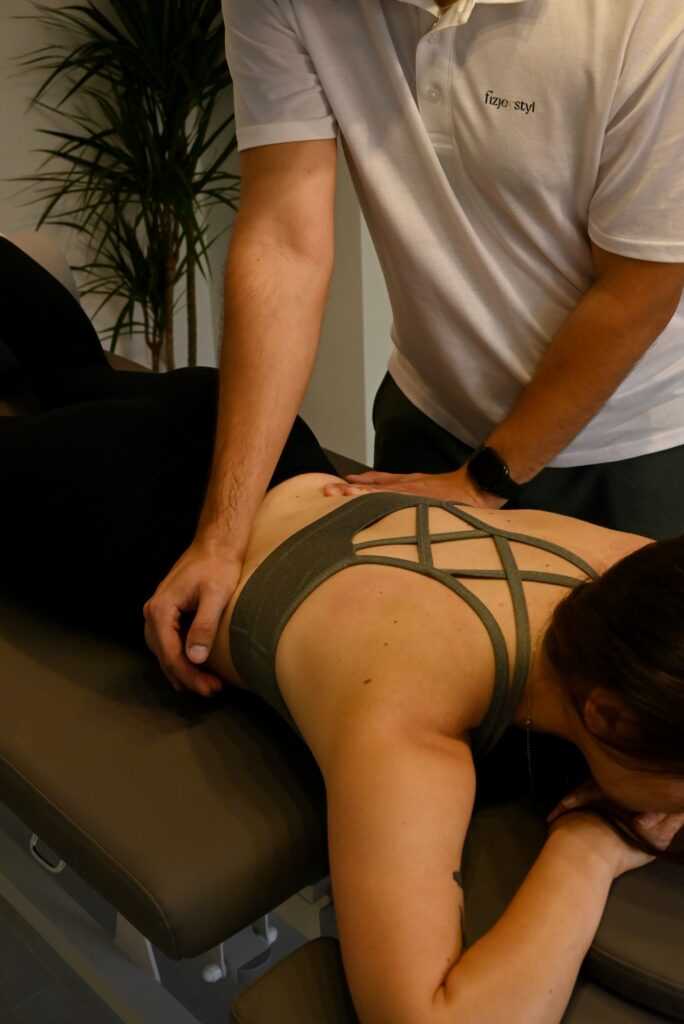
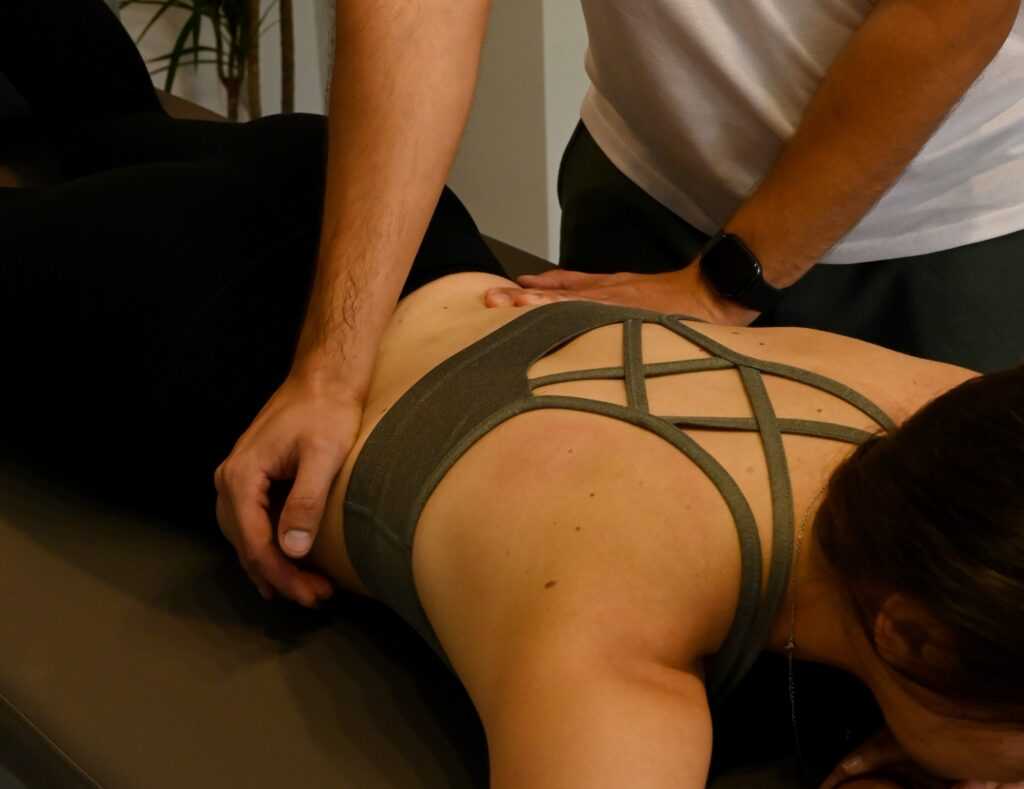
What to do and when to see a physiotherapist?
Sudden, sharp pain in the lower back can come on when you bend down, pick something up off the floor, get up from a chair or even during a seemingly harmless movement. Patients often describe it as having "put their back out" or as a "shooting pain in the spine".
An episode like this can severely restrict movement and cause worry that something has been seriously damaged. That isn't always the case. Most acute lower back pain is non-specific, meaning that the symptom alone doesn't point to one damaged structure. However, possible sources of the pain include the intervertebral discs, spinal joints, muscles, ligaments or nerve structures.
What can cause sudden back pain?
"Putting your back out" isn't a specific medical diagnosis. It's an everyday term for sudden pain that can have various causes.
Structures that may be involved in acute lower back pain include, among others:
- The intervertebral disc and disc herniation
Between the vertebrae are the intervertebral discs, which help transfer loads and allow the spine to move.
Changes or damage to the annulus fibrosus can occur within the disc, with its contents bulging outwards. If the herniation starts to irritate a nerve root, as well as back pain you may experience:
- pain radiating into the buttock or leg,
- tingling,
- numbness,
- changes in sensation,
- weakness in specific muscle groups.
It's worth remembering, however, that disc changes visible on imaging don't automatically mean they're the source of the pain. A diagnosis requires matching the symptoms with a clinical examination.
- Facet joint irritation
The facet joints are located at the back of the spine and help guide its movements.
Sudden overload, a movement made under load or irritation of these structures can cause local, often one-sided pain in the lower back.
Symptoms related to this area may increase when:
- straightening the spine,
- twisting the trunk,
- staying in one position for a long time.
The pain may also radiate into the buttock or thigh, although it doesn't usually follow a typical neurological pattern.
- Overload of the lumbar muscles and ligaments
A sudden movement or lifting something heavy can overload the muscles and soft tissues surrounding the spine.
In this case, the pain may result from, among other things, excessive tension or micro-damage to structures such as:
- the erector spinae,
- the multifidus,
- the quadratus lumborum,
- the thoracolumbar fascia,
- the ligaments stabilising individual segments of the spine.
This often brings on a characteristic "locking" of the back. The muscles may tighten as a protective response.
- Nerve root irritation
If, as well as sudden back pain, you have pain travelling towards the buttock, thigh, calf or foot, one possible mechanism is irritation of nerve structures.
The nerve roots leave the spinal canal and then form the nerves running to the lower limbs, including the sciatic nerve.
In this case, the assessment looks not only at the spine itself, but also at:
- muscle strength in the limb,
- sensation,
- reflexes,
- how the nerve responds to movement,
- the presence of radiating pain.
However, not every episode of sudden pain means a herniated disc or a "trapped nerve". In acute lower back pain the possible sources vary, and identifying a specific structure from the nature of the pain alone is difficult.
When should you see a physiotherapist about sudden back pain?
If the pain is gradually easing and you can move a little more each day, you can often start with a gentle return to your everyday activities.
However, it's worth consulting a physiotherapist when:
- the pain keeps coming back,
- it's hard to straighten up or move normally,
- the symptoms persist despite several days of gradually increasing activity,
- the pain starts radiating into the buttock or leg,
- certain movements keep triggering the same sharp pain,
- you've put your back out like this before.
During the visit, the physiotherapist can check the mobility of your spine and hips, your muscle strength, your response to specific movements and – if necessary – the function of your nerve structures.
Based on this, a further therapy and exercise plan is put together.
There are, however, situations in which the first step shouldn't be a standard physiotherapy appointment, but an urgent medical assessment. This applies in particular to new serious neurological symptoms, a clear loss of strength, bladder or bowel problems, altered sensation in the groin and genital area, or other symptoms suggesting a more serious cause of the pain. Routine imaging isn't recommended for every patient with acute back pain; the need for it is assessed based on the examination and the presence of so-called red flags.
If you've put your back out again, it's worth not just waiting for the acute pain to pass. At FizjoStyl we can assess which structures and loads may be relevant in your case and prepare a plan for a gradual return to normal movement and activity.
Need help in person? Physiotherapy in Kraków – FizjoStyl: clinics in Kliny and at ul. Wolska 2a.
Want to talk it over with a physiotherapist?
Book a free 15-minute consultation. We will talk about your problem and, if you wish, continue straight into a full visit.
Wolska 2a clinic
Prokocim, next to the Bieżanowska stop. Parking in front of the building.
See the clinic →